38%
Reduction in field risk incidents
With hundreds of field engineers working daily across high-voltage, high-consequence customer sites, Siemens needed more than pre-planned risk assessments. They needed real-time visibility at the exact moment risk was highest. Q-Score delivered that, and the results followed within 45 days.
38%
Reduction in field risk incidents
3X
Improvement in hazard reporting
72%
Corrective actions closed on time
Zero
Incidents on Q-Score assessed tasks
Client
Siemens
Division
Manufacturing
Duration
45 Days
Active Sites
40+
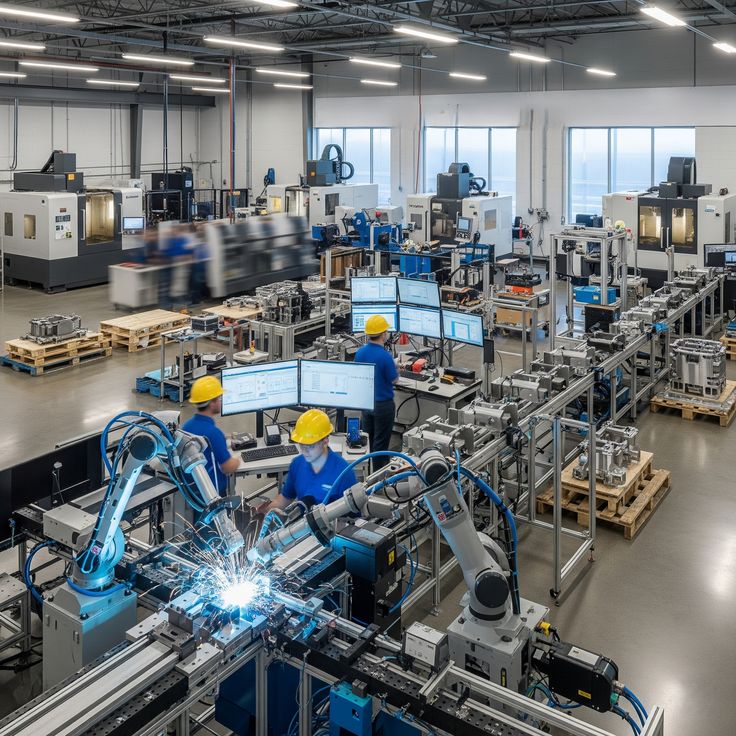
Siemens is one of the world's largest technology and engineering companies, employing more than 318,000 people worldwide. The company is active in sectors such as digital industries, smart infrastructure, mobility, and healthcare. Under its Smart Infrastructure division, Siemens deploys and maintains complex electrotechnical and automation systems in a variety of locations, including industrial facilities, commercial buildings, hospitals, data centers, and transport infrastructure.
Its field engineering teams perform planned and emergency maintenance, commissioning, and installation work at more than 40 active customer sites at any given time. These environments present unique and constantly changing risk conditions, which can change daily and sometimes hourly. Each deployment requires engineers to work autonomously in high-voltage and sensitive environments, where ground conditions often differ significantly from those anticipated at the time of planning.
Siemens considers safety to be a core operational value, backed by a robust and systematic Environment, Health and Safety (EH&S) framework. This includes site-specific risk assessments, dynamic risk assessment protocols for field service engineers, and quarterly EH&S inspection cycles. Despite this strong foundation, a significant gap existed between the quality of the safety documentation already developed and the actual conditions encountered in the field.
Siemens field engineering teams were operating with strong technical expertise and a true commitment to safety. However, when engineers left the office and arrived on site, three persistent challenges limited the effectiveness of the EH&S program:
Field engineers often arrived at customer sites to find conditions different from the risk assessments that had been developed during the planning phase. Electrical panels had been reconfigured, third-party contractors were working in nearby areas, or access to the plant was restricted, factors that had not been previously identified.
Because pre-task documentation had been completed hours or days in advance, there was no systematic way to regularly reassess risk during the job. As a result, supervisors were unaware that the original plan no longer reflected reality on the ground.
Since engineers were working autonomously across dozens of different sites simultaneously, the quality and consistency of real-time hazard identification were inconsistent. Subtle but important risk signals, such as unexpected live circuits, sudden changes in the work environment, or informally assigned alternative tasks by clients, were often reported either after the work was completed or not at all. At the time, there was no standard, mobile-friendly way to record these observations in the moment.
Field operations managers had no live view of risk exposure at their sites. Risk information was either provided in end-of-day reports or through notifications after an incident. By the time risk patterns were brought to the attention of leadership, the opportunity for proactive action had been lost. Most of the EH&S team’s time was spent reacting to issues rather than preventing them.
The combined effect of all these factors created a safety program that was strong on paper, but lacked the ability to respond quickly to the changing realities of field engineering operations across multiple sites.
Siemens agreed to implement the Q-Score risk assessment tool as a focused 45-day pilot in its Smart Infrastructure Field Engineering division, targeting high-risk tasks, including electrical panel commissioning, high-voltage isolation and switching, confined space entries in building services environments, and reactive fault diagnosis on live systems.
The implementation was intentionally kept simple and seamless, and was implemented in four clear phases:
Phase 1

Field engineers completed a brief 20-point Likert scale risk assessment using Q-Score's mobile app immediately before starting each high-risk task. This assessment was conducted on-site, in real time, that is, after all existing method statements and pre-job documentation had already been reviewed. The assessment took less than four minutes to complete and required no additional paperwork.
Phase 2

Q-Score generated an instant numerical score that reflected the potential consequence severity at the time of the task, incorporating the principles of Human and Organizational Performance (HOP). The score took into account factors such as error precursors, critical task steps, energy sources, and the actual state of the current environment, resulting in a risk scenario that would not have been possible with any pre-planned assessment prepared hours in advance.
Phase 3

When the score exceeded a set threshold, the platform automatically sent a notification to the supervisor, leading to immediate discussions to mitigate the risk before work could begin.
If a situation could not be adequately controlled, engineers were empowered to use stop-work authority directly through the platform. This created a formal, auditable record of every decision, ensuring both transparency and accountability.
Phase 4

At the end of each completed task, a brief After-Action Review (AAR) was conducted, recording what situations actually occurred, what mitigations were taken, and what more could be learned.
All of this data was immediately fed into the Operations Leadership Dashboard, creating a live and clear picture of risk exposure for each site across the entire field portfolio. No new compliance burden, no additional administration. Q-Score was positioned for field engineers as the final intelligent check before risk peaked, a fast, mobile-first layer that worked alongside Siemens' existing EH&S framework without replacing a single element of it.
Within 45 days, Siemens recorded clear and sustained improvements in all performance indicators that were being tracked during the pilot. These results were not achieved by hiring additional staff, changing procedures, or increasing work hours.
The real difference was made by Q-Score, which closed the visibility gap that had always hindered proactive risk management from being effective at the speed and scale of field engineering.
38%
Reduction in field engineering risk incidents vs. the equivalent prior 45-day period
3x
Increase in real-time hazard capture across customer sites vs. pre-pilot baseline
72%
Of corrective actions generated through Q-Score closed on time during the pilot window
Zero
Incidents or near-misses recorded on tasks assessed through Q-Score during the 45-day period
45 days
from pilot launch to measurable, sustained improvement in field risk visibility
2 weeks
From mobile app onboarding to first completed Q-Score assessment in the field
Undocumented live conductors in legacy panel configurations
Unannounced co-located contractor activity creating zone conflicts
Unexpected access restrictions requiring task substitution on site
Environmental conditions affecting safety parameters of planned electrical work
Head of EH&S
Smart Infrastructure Division
"Our engineers are highly skilled and genuinely safety-conscious. The problem was never attitude or intent; it was the absence of a structured mechanism to capture what they were actually seeing the moment they arrived on site. Q-Score filled that gap precisely. The 38% reduction in field incidents came directly from turning invisible, real-time risk into visible, actionable intelligence. For the first time, our operations managers and our engineers were working from the same live picture."
Senior Field Engineer
Smart Infrastructure Division · Pilot participant
"Before Q-Score, I'd arrive on site, run through my method statement, and get on with the job. If something had changed — a panel reconfigured, a contractor working nearby, access routes blocked — I'd note it mentally and crack on. There was no quick, structured way to flag it formally before starting. Q-Score changed that completely. It takes three minutes, it's on my phone, and it genuinely makes you stop and think about what's actually in front of you rather than what the paperwork says should be. I've raised three hazards through it that I honestly don't think would have made it into any report otherwise."
If your operations managers still can't see what's happening on site until the end of the day, the gap is still open. Q-Score closes it in minutes, on any device, before the first task begins. Book a 15-minute demo or request a free 45-day pilot built around your sites and your workforce.


Copyright © 2025 Qscore™. All Rights Reserved.


